

Snow, Silk & the Land That Wouldn't Let Me Leave

You know? The relationships that last are the ones where they let you become a better version of yourself? Well that's my relationship with Sikkim because its hands down the 'safest' space one can be in - atleast once in a lifetime.
My Sikkim Tale | Let's Explore Sikkim

I read about Sikkim before I ever saw it — on a flight from Ahmedabad to Jaipur in 2010, in an old copy of Travel XP magazine that someone had left in the seat pocket. There was a piece on the Northeast, and one line from it has stayed with me since: that the waterfalls here seemed to extinguish something restless in the soul, and the forests were too green, too lush, to ever let anyone go hungry. I don't remember the rest of the article. I remember wanting to go experience it and not really knowing why.
Four years later, in 2014, I did. I told myself it was a four-month trip. I left my art studio business behind, reached Gangtok, and took a job as a senior architect at a private design firm for ₹20,000 a month. I wasn't running from anything — I wanted to learn to build within a fragile mountain context and come back a better architect. That job, and that ₹20,000, became my base while I explored what Sikkim actually had to offer me. Somewhere along the way I realized I could be a better tour curator than I was ever going to be an architect. Haha.
I stayed eight years. Somewhere in those eight years I stopped being a visitor. I changed careers and enjoyed them to the T only to explore my potential, before tourism took over me, made friends I still call home, and learned — slowly, the way mountains teach you things — what it means to live well instead of just live fast. If that isn't slow travel, I don't know what is. Sikkim slowed me down to feel more.
I'm writing this North Eastern Trade route — Gangtok to the passes of the old Silk Route, up into Lachen & Lachung and Yumthang, down through the tea gardens of Temi, and west into Pelling — because it's the route that taught me the state, one region at a time. India sat at the center of world trade for centuries, and Sikkim, tucked between Nepal, Tibet and the plains, was one of its quieter doorways. Walk through it with me.

Gateway to the Hills — Gangtok
Gangtok is, by far, my favourite city — and I say that after eight years and a lot of comparison. Hehe. It's walkable, it's breathable, and it sits under the constant watch (and blessing, if you ask anyone local) of Kanchenjunga. M.G. Marg is the best mall road in India, hands down — no traffic, no honking, just cafés, music spilling out in the evenings, and people who feel genuinely forward-looking. It's a small city that behaves like a big one after dark, and it's the kind of modern, unhurried place India could use more of.
Gangtok is also Sikkim's fourth capital, moved here largely because of how close it sits to the old Tibet border. And it wasn't just an administrative choice — Gangtok was historically the main market town where produce from all over East Sikkim came to trade, alongside goods that crossed over from China via Nathula. In a sense, the city has always been a meeting point, long before it became one for travellers.
Here's what most people walking M.G. Marg today never guess: this exact pedestrian street, lined with cafes and lounges, was a working, motorable traders' market right up until 2008 — vendors came in from across the region with textiles, oranges, vegetables and local Temi tea, until the market moved to Kanchendzonga Market and M.G. Marg was redesigned into the walkable promenade you'd stroll today. And of Sikkim's four capitals, three fell to invasion or were simply abandoned — Gangtok is the only one that just kept growing.
Did you know Sikkim was its own kingdom until May 1975, when it became India's 22nd state? It still carries that independence in its posture — unhurried, sure of itself, generous with strangers.
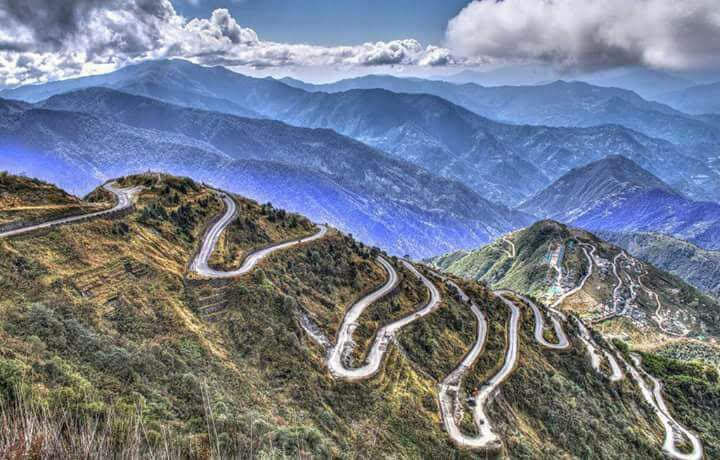
The Old Silk Route's Eastern Thread
A day out of Gangtok, the road climbs to Changu Lake and, on a good day, onward to Nathula Pass — one of the actual crossing points of the historic trade route into Tibet. Locally, this eastern stretch was called the Tea-Horse Route, and traders once carried wool, tea, and salt across passes that tourists now cross for a photograph. You can still find shops here selling Chinese-made fireplaces and winter wear, traded, once upon a time, for Temi tea and mountain fruit. The exchange never really stopped. It just changed shape.
Nathu La itself means “listening ears pass,” and it's one of only three open trading border posts between India and China today. The pass was sealed into a militarised frontier after the 1962 war, and reopened — in a limited, permit-controlled way — only in 2006. For a brief window every year, Indian traders still cross it to sell goods the way their predecessors did on the old Tea-Horse Route.

Town on the Big Pass — Lachen
Lachen means "the big pass," and it earned that name honestly. Long before any border was drawn the way it is today, this was a crossing point between Sikkim and Tibet, back when both were kingdoms in their own right — and what crossed wasn't just goods. Trade here was both monetary and religious: wool, salt and tea went one way, monks and scripture went the other, and the village grew up around that exchange. The Lachenpas who live here now are descendants of exactly that — herders and traders first, long before anyone came for the view.
I still remember walking through Lachen in the evening with a host who's lived there his whole life — past the spot where the Dzumsa, the village's own centuries-old self-governing council, still settles things the old way, led by an elected headman called the Pipon. It isn't just a Lachen thing — the same system runs right across North Sikkim, Lachung included.
The Dzumsa was formally recognised by the Sikkim government in 2001, and its elections are refreshingly direct — candidates stand at fixed spots around the village and people physically gather around the one they back, the winner decided by headcount, in full public view.
Beyond the village, the road climbs through Thanggu — a high pasture where you start noticing just how close Tibet really is, this entire stretch held under a steady army presence.
And then there's Gurudongmar itself:
close to 17,800 feet, one of the highest lakes in the world, sacred to Buddhists, Hindus and Sikhs alike. Local legend holds that Guru Padmasambhava touched the lake so that one patch would never freeze, even through the harshest winter, keeping water for the people who lived off it. I've stood there and watched that patch refuse to ice over while everything around it does — it's easy to see why the story has survived this long.

The Land In Between — Lachung
North Sikkim is a different country within the state. Lachung means "small pass," and the name is a memory of what the town actually was — a stop for traders headed further into Tibet before it became a base camp for people chasing snow. The Lachungpas and Lachenpas who live here are descendants of that trade history, and their homestays, built the old way, have stood for centuries in a landscape that makes almost nothing else last that long.
Did you know North Sikkim stayed largely uninhabited outside these trading settlements, simply because the climate refused to make it easy? That's part of why it still feels untouched.
North Sikkim wasn't just a trade corridor — it was also the route for religious exchange from Tibet, carrying Buddhist teachers, texts, and pilgrims south long before it carried tourists. Its proximity to the China border means large parts of it now sit under army presence, and yet Lachen and Lachung have held on to something no army administers: the Dzumsa, a centuries-old self-governance system led by an elected headman, the Pipon. It's one of the few traditional institutions in India formally recognised under the Constitution, and it still runs local disputes, grazing land, and resource-sharing here — largely outside the regular panchayat system the rest of Sikkim follows.
And no trip through North Sikkim is complete without at least hearing about Dzongu — the reserved Lepcha homeland tucked between Lachen and Lachung, sealed off from outside settlement since a royal proclamation in 1956. It exists to protect the Lepchas, Sikkim's original inhabitants, and their language, beliefs and way of life from being diluted the way the Chogyals feared they would be. Entry needs a permit even today. It's not a place you casually pass through — it's a place you're allowed into, and that distinction matters.

Yumthang and the Edge of the Road
Yumthang Valley is called the Valley of Flowers for good reason — 33 varieties of rhododendron bloom here in season, though in winter the valley trades color for snow and a kind of hush I've never found anywhere else. Push further and you reach Zero Point, sitting close to 15,300 feet, where the motorable road simply ends and the Teesta river begins. There's something quietly humbling about standing at a point named for having nothing beyond it.
Did you know? - The 'End of Sky' music video by Hangmassive was shot in North Sikkim and i was their Travel Partner :) It was epic to work with them! Go check it out if you havent seen it yet!
Yumthang's own hot spring sits right on the bank of the Lachung river — a simple wooden hut over two pools, water close to 50°C, believed locally to help with skin and joint complaints. Zero Point, 25 km further on, has no built infrastructure at all — just a handful of wild springs steaming straight out of the ground at nearly 4,660 m.

Tea Country — Temi
South again, and the landscape softens into Sikkim's tea country. Temi's estates are government-run and organic, and the tea grown here has been part of India's export trade for decades — a much gentler continuation of the same trading instinct that built the Silk Route. I've spent evenings in Temi folding momos with families who've farmed this land for generations, and it's one of the few places where the pace of the trip finally matches the pace of the place.

The Wild West — Ravangla and Pelling
West Sikkim is forest and farmland, shared by Lepchas, Bhutias and Nepalis in roughly equal measure. Ravangla's Buddha Park holds one of the tallest Buddha statues in the state, and Pelling, once Sikkim's second capital, still carries the grandeur of that history in its monasteries and ruins. Pelling only lost its capital status after repeated conflict with Nepal in the 1800s — a reminder that even the calmest mountain towns have complicated pasts.
And while it isn't on this particular route, Yuksom is a must-do whenever you're in Sikkim's west. It was Sikkim's very first capital — Phuntsog Namgyal was crowned the state's first Chogyal here in 1642, at the Norbugang throne, in a coronation that reportedly ran 21 days. The Namgyal dynasty he founded ruled Sikkim for the next 333 years, until it merged with India in 1975. The throne still stands in Yuksom today, quiet proof of where this entire kingdom actually began.
Why I Keep Going Back
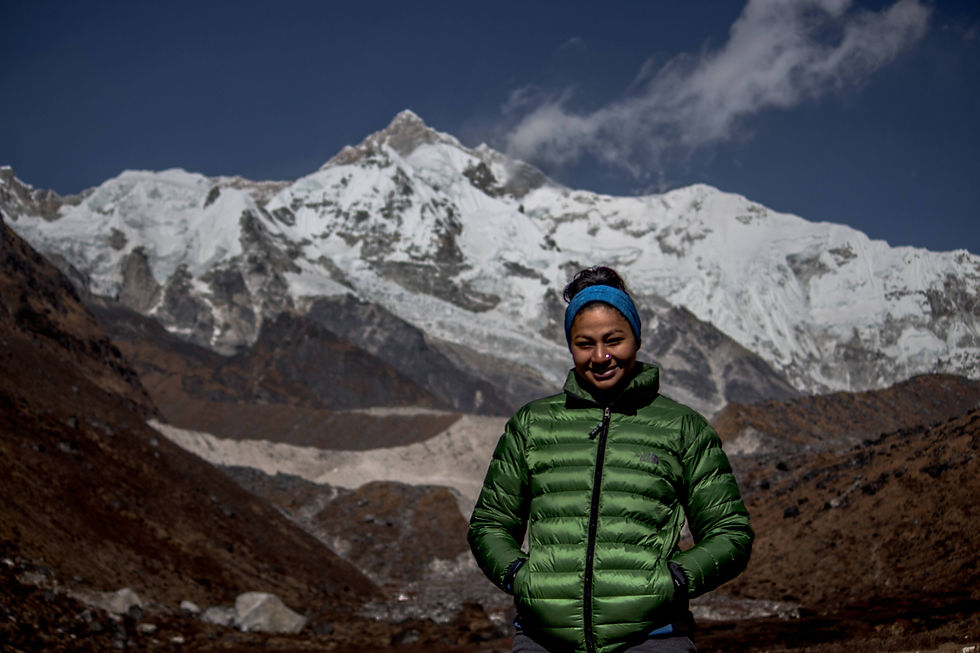
I didn't plan to write a route through my own history, but that's what this one turned out to be. Every stop on it — Gangtok, the passes, Lachen, Lachung, Yumthang, Temi, Pelling — is a place I lived in before I ever thought to bring guests there. That's still how I build every itinerary here: not from a map, but from the version of the place I actually know.
If you've read this far, you already have the instinct for slow travel, even if you've never called it that. Come see the Trade corridors of Sikkim with me on our Scheduled Departures to SIkkim 2027 — the full day-by-day is in the itinerary post.
Achullay, and see you on the other side!


Comments