

Things to Do in Sikkim in Autumn | Thinks to do in Gangtok | Best of Sikkim with Travel AIP


Most people think of Sikkim's autumn as simply “clear skies, good for photos.” It's a lot more specific than that. Between September and November, six things line up here that don't happen quite the same way in any other season — a bloom that arrives backwards from what the rest of the world expects, a harvest most visitors never notice is happening around them, and the one window of the year when Khangchendzonga stops hiding. Here's what to actually plan your trip around.

1. Catch the Cherry Blossoms — They Bloom in Autumn Here, Not Spring
Sikkim's wild Himalayan cherry (Prunus cerasoides, known locally as sour cherry or padmakh) does something most people don't expect: it blossoms in autumn, not spring. From late October through November — with November the reliable peak, and the flagship festival season running into early December — hillsides across South Sikkim turn pink and white while the rest of the world is still waiting for March.
Temi Tea Estate, about 51 km from Gangtok, is the flagship spot and the one we send people to first, but the bloom shows up more broadly too, across Gangtok, Namchi, Ravangla and North Sikkim's Lachen–Lachung belt. If autumn is your Sikkim window, this is worth building a day around.

2. Time Your Hot Springs Visit Right
Sikkim's natural sulphur hot springs — locally called tsa-chu, long used for their reputed skin- and joint-healing properties — have a genuinely better window in autumn than most people realise. September through November is the sweet spot: the monsoon has cleared out, but winter hasn't yet snowed the higher approaches shut. Outside that window, you're either dealing with monsoon rain and landslides or a much harder, colder approach.
3. Trek to the Clearest Kanchenjunga Views of the Year
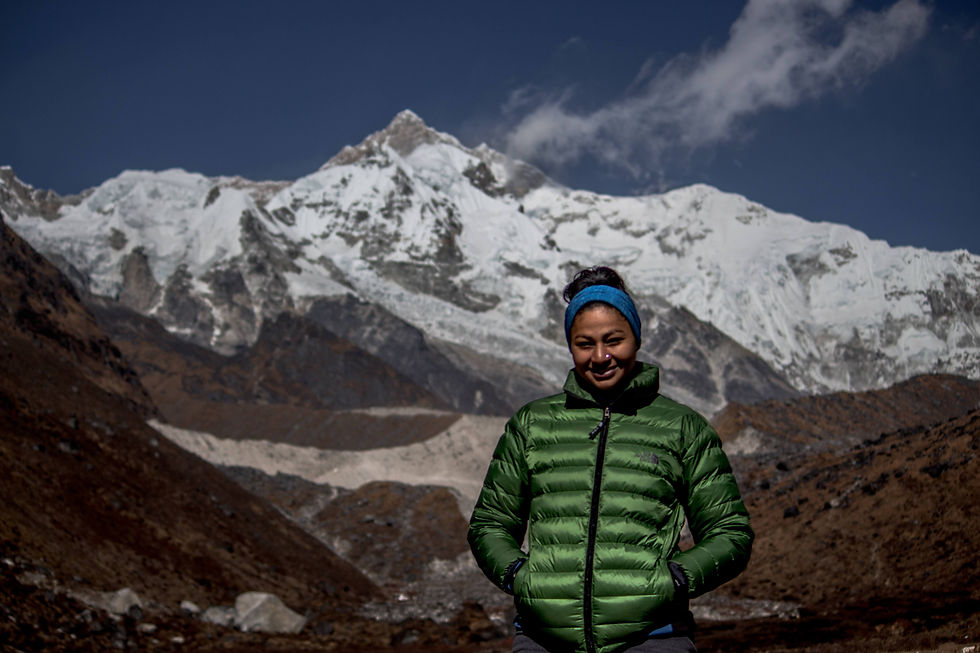
If you're going to do one high-altitude trek in Sikkim, autumn is when to do it. The Dzongri–Goecha La trail — West Sikkim's signature route, running from Yuksom up to Dzongri (around 4,020 m) and on to the Goecha La viewpoints (around 4,940–5,000 m) inside Khangchendzonga National Park — is the closest most trekkers get to Kanchenjunga without a mountaineering permit, looking straight across the Onglakthang glacier at the third-highest mountain on Earth.
Mid-September through November is the full window, but October and November are the ones to aim for specifically — September still carries some residual monsoon rain and slippery patches, while November brings the clearest skies of the year and only light, manageable cold.

4. Learn Where Sikkim's Cardamom Comes From
It's easy to spend a week in Sikkim in autumn and never notice one of its most valuable exports is being harvested around you. Large cardamom (Amomum subulatum, locally alaichi) is a GI-tagged Sikkim crop and one of the state's biggest cash earners, harvested from around August–September at lower altitudes through November, running into December at the highest plantations — so most of the harvest window sits squarely inside autumn.
North Sikkim's Mangan sub-division, in and around Dzongu & West Sikkim is the leading producer, though cultivation spreads across all four districts wherever shaded, mid-hill forest suits the crop. Worth asking your driver or homestay host about if you're passing through — it's a quiet, real piece of Sikkim's economy, not a tourist add-on.

5. Catch Pang Lhabsol, If the Timing Lines Up
Pang Lhabsol is a uniquely Sikkimese festival honouring Mount Khangchendzonga as the state's guardian deity, alongside the warrior-god Mahakala — centred at Tsuklakhang Palace Monastery in Gangtok, with parallel celebrations at monasteries across the state including Pemayangtse. Its centrepiece is the Pangtoed Chham, a masked warrior dance performed by monks in armour-like costume.
It falls in autumn, but on a lunar date that shifts every year against the Gregorian calendar — so rather than naming a fixed date here, the honest advice is to check the specific year's date before you plan around it. If your autumn trip happens to line up, it's worth rearranging a day for.

6. Visit an Orange Orchard During Harvest
From around October, Sikkim's mandarin orange trees start ripening — fruit visibly reddening on the branch, orchard visits beginning, with the fuller harvest running through into December. It's grown across all four districts: Dzongu in the north, the Khamdong–Pendam belt in the east, Sadam in the south, and several pockets in the west, most visitably at Rimbi Orange Garden near Pelling.
Autumn catches the start of the season, when the orchards are at their most photogenic and least picked-over — a good half-day stop on a West Sikkim route.

Planning Around All Six
None of these six things need a special trip on their own — they're all sitting inside the same September-to-November window, which is exactly why autumn is the season we build most of our Sikkim itineraries around. A West Sikkim route can catch the trek, the cherry blossoms and an orange orchard in the same loop; a North Sikkim route can fold in the cardamom belt around Dzongu alongside the hot springs.
If you want the full day-by-day version of any of this, our Sikkim itineraries live on Curated Experiences — or write in and we'll build the route around whichever of these six matters most to you. Come travel to Sikkim with us this autumn. Call / Whatsapp 8172047843

Comments